How to streamline international deliveries by implementing a multi-hub logistics model
International deliveries have become harder to manage as volumes increase, markets diversify, and customers expect fast delivery and clear information about order status. If you operate in multiple countries, you have likely already noticed recurring bottlenecks: long transit times, unpredictable costs, and lack of visibility between warehouses, couriers, and internal teams.
This practical guide shows you how to optimize international deliveries by implementing a multi-hub logistics model. You will find clear steps, decision criteria, performance indicators, and concrete examples, so your team can quickly apply these principles to daily operations. The focus is on stable results: faster deliveries, controlled costs, and a better experience for end customers.
1. Defining Objectives and Relevant KPIs
Before discussing hubs, locations, or suppliers, clarify what you want to improve. A multi-hub model works well only if it addresses concrete operational objectives. In most cases, companies aim to reduce total delivery time, decrease cost per order, increase the OTIF (On-Time In-Full) rate, and improve visibility over international flows.
Define measurable KPIs for each objective. Commonly used examples in multi-hub networks include OTIF per hub and per country, cost per delivery, cost per unit shipped, total time in the network (from order placement to delivery), and utilization rate of each hub. This data allows you to compare performance between regions and quickly identify deviations.
A common mistake occurs when teams only track transportation costs. For stable results, correlate cost with delivery time and success rate. A hub with low rates but frequent delays generates complaints and additional costs in customer support and returns.
2. Mapping the Existing Logistics Network
The next step involves a realistic analysis of the current network. Map the flows as they function now, without theoretical adjustments. Note the starting points of the goods, consolidation areas, transit hubs, customs points, and involved couriers. Include the actual times spent in each stage.
Use data extracted from TMS (Transportation Management System), tracking reports, and information from operational teams. If you notice data gaps or fragmented reports, this is a clear signal that visibility needs to be improved before redesigning the network.
For comparative analysis, performance dashboards are very helpful. For example, through Innoship Free Analytics, you can quickly see the differences in time and cost between routes, markets, and couriers. This way, you identify areas where an additional hub would reduce bottlenecks or shorten transit times.
3. Choosing the Right Locations for Hubs
The selection of hubs must be based on clear operational criteria, not just their position on the map. Analyze proximity to final markets, access to road, air, or rail infrastructure, the processing capacity of local warehouses, and costs associated with labor and auxiliary services. Access to fast customs services directly influences cross-border delivery times.
A regional hub operates efficiently when it serves a well-defined group of markets. For example, for companies active in Poland, the Czech Republic, and Germany, a hub in Central Europe reduces delivery times by 24–48 hours compared to a single hub located at the network’s periphery. This advantage is quickly seen in the OTIF rate and customer satisfaction.
Avoid concentrating all volumes in a single central hub. For regular use, secondary hubs with a clear role take over operational pressure and reduce risks associated with local interruptions or capacity overload.
4. Defining the Functions of Each Hub in the Network
Not all hubs need to serve the same functions. Clarify the role of each point in the network to avoid overlaps and dead times. In practice, hubs are divided into several categories
international consolidation hubs, cross-docking hubs, customs clearance hubs, and last-mile distribution hubs.
A cross-docking hub processes large volumes in a short time, without long-term storage. It is suitable for fast-turnover flows. Distribution hubs manage final deliveries and local returns, requiring close integration with couriers in each country.
Document these roles and communicate them clearly to teams. Lack of delineation leads to duplicated operations, additional costs, and delays that are difficult to explain to customers.
5. Operational design of logistics flows
After establishing the hubs, design the operational flows in detail. Draw the inbound, processing, and outbound routes for each order type. Set standard times for reception, sorting, consolidation, and dispatch. Define internal SLAs (Service Level Agreements) between hubs so that each team knows what to deliver and within what timeframe.
Integrate smart consolidation and deconsolidation. For international transport, consolidation reduces unit costs. In regional hubs, fast deconsolidation allows for quicker local deliveries. This balance supports both financial efficiency and customer experience.
A common issue arises when transit hubs end up storing unnecessary goods. The solution consists of clear cross-docking rules and strict limits on the maximum time spent in the hub, monitored through operational KPIs.
6. Technology and integration between hubs

A multi-hub model relies on integrated technology. Without connected systems, coordination becomes difficult. You need a TMS for route planning and courier allocation, a WMS (Warehouse Management System) for hub operations, and a visibility platform that aggregates tracking data in one place.
Integration via API (Application Programming Interface) ensures real-time data exchange between systems. Thus, each hub and each team sees the same statuses and ETAs (Estimated Time of Arrival). This reduces manual errors and time spent on checks.
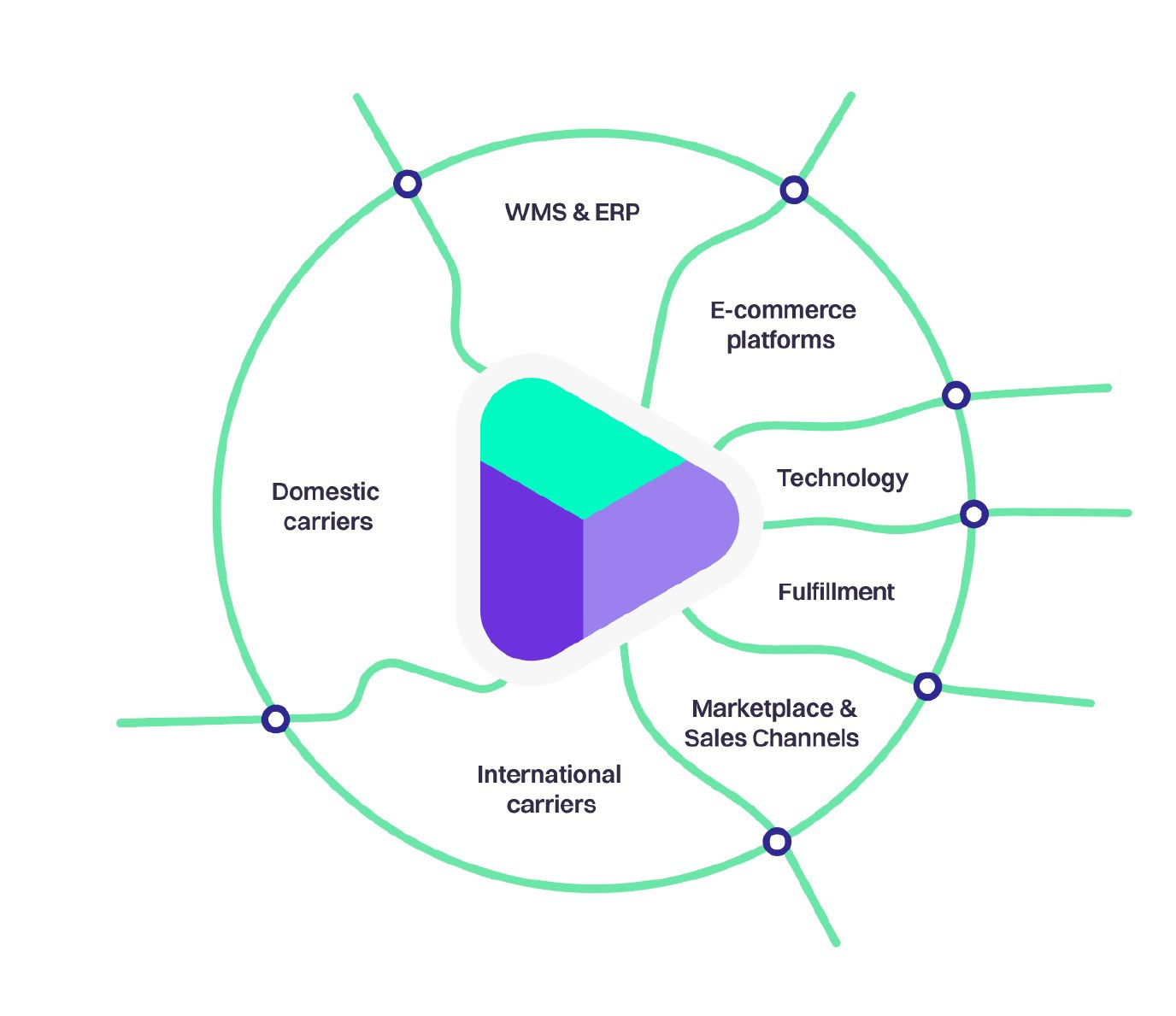
Through ecosystems like the one presented on the integrations page, you can quickly connect multiple couriers and IT systems without complex developments. For companies operating in multiple countries, this approach simplifies network expansion and maintains operational control.
7. Staged implementation with controlled pilot
Avoid simultaneous implementation of the entire model. For predictable results, start with a well-defined pilot. Choose a region or product line and test the new multi-hub structure on controlled volumes. Measure the previously defined KPIs and collect feedback from the involved teams.
A frequently used implementation plan includes four steps:
- Launching a secondary hub for a clearly defined market
- Monitoring performance and adjusting flows
- Expanding to other similar markets
- Standardizing processes at the network level
This approach allows for gradual adaptation of teams and reduces the risk of operational blockages during high-volume periods.
8. Daily monitoring and continuous improvement
After launch, monitoring becomes a daily activity. Compare hub performance and identify deviations before they affect customers. Currently tracked indicators include OTIF per hub, average processing time, cost per delivery, and exception or return rate.
Centralized data allows for quick decisions: rerouting orders, changing the courier for certain areas, or adjusting capacity in overloaded hubs. Good visibility reduces the volume of “where is my package?” inquiries and frees up time for optimization.
A professional tracking system, detailed in the guide on professional courier tracking, supports these decisions with consistent and easy-to-interpret data.
9. Risk Management and Customs Compliance
International deliveries bring risks related to customs, taxes, and local regulations. Decide where to perform customs clearance: in a central or distributed hub, regionally. Each option affects transit times and administrative costs.
Collaborate with local customs brokers and standardize documentation for all markets. Automation reduces errors and speeds up processing. Solutions that allow you to generate transport documents from a single system help maintain consistency and reduce manual interventions.
Plan risk scenarios: customs delays, temporary unavailability of a hub, or lack of courier capacity. Define alternative routes and backup hubs to maintain delivery continuity.
10. Concrete Examples and Best Practices from the Market
An eCommerce retailer active in Romania, Poland, and the Czech Republic transitioned from a single central hub to a network with three regional hubs. After six months of operation, the company observed a reduction of approximately 20% in operational costs and a 15% increase in on-time deliveries. The average cross-border delivery time decreased noticeably, and the number of customer support tickets was reduced.
The success came from two directions: integrating local couriers for each market and automatically allocating orders to the optimal hub. The approach aligns with the recommendations from the guide on integrating local courier services for each market.
For regular use, these examples show that technology and operational design matter more than rapid expansion without data.
11. Next Steps for Implementation
A multi-hub logistic model gives you more control over international deliveries and a solid base for regional scaling. Results appear when objectives are well defined, flows are clear, and technology supports daily decisions.
The next steps are practical: analyze existing data, establish relevant KPIs, launch a pilot, and adjust constantly. If you want to accelerate the process and avoid common errors, talk with teams who have already implemented multi-hub networks in several European markets.
See how Innoship can help you coordinate international deliveries in a multi-hub model, with complete visibility and data-driven decisions.
FAQ
1. What are the primary objectives of implementing a multi-hub logistics model?
The primary objectives of implementing a multi-hub logistics model include reducing total delivery time, decreasing cost per order, increasing the OTIF (On-Time In-Full) rate, and improving visibility over international flows. These objectives are supported by defining measurable KPIs such as OTIF per hub and per country, cost per delivery, and utilization rate of each hub. Aligning these objectives with the multi-hub model ensures stable results, faster deliveries, controlled costs, and a better experience for end customers.
2. How can companies choose the right locations for their hubs?
Companies should choose hub locations based on clear operational criteria rather than just geographic position. Factors include proximity to final markets, access to road, air, or rail infrastructure, the processing capacity of local warehouses, and associated labor and auxiliary service costs. Fast customs services are also crucial for reducing cross-border delivery times. A well-positioned hub can significantly improve the OTIF rate and customer satisfaction by reducing delivery times.
3. What functions do different types of hubs serve in a logistics network?
Hubs in a logistics network serve various functions, including international consolidation, cross-docking, customs clearance, and last-mile distribution. Cross-docking hubs process large volumes quickly without long-term storage, while distribution hubs manage final deliveries and local returns. Clear role delineation prevents duplicated operations, additional costs, and delays, ensuring each hub operates efficiently within the network.
4. Why is technology integration important in a multi-hub logistics model?
Technology integration is vital for a multi-hub logistics model because it ensures coordination and real-time data exchange across the network. A TMS (Transportation Management System) is needed for route planning and courier allocation, while a WMS (Warehouse Management System) manages hub operations. Integration via API allows for consistent statuses and ETAs, reducing manual errors and improving operational control. This connected ecosystem simplifies network expansion and enhances delivery efficiency.
5. What are the best practices for implementing a multi-hub logistics model?
Best practices for implementing a multi-hub logistics model include starting with a well-defined pilot, choosing a specific region or product line to test the structure, and measuring relevant KPIs. Gradual adaptation through staged implementation allows for performance monitoring and flow adjustments, minimizing operational blockages. Continuous improvement is achieved by daily monitoring of hub performance, quick decision-making, and leveraging technology to streamline logistics operations.