





Innoship | 07 February 2026 | Shipping Strategy
Shipping Strategy
Reducing shipping errors through automated double-check processes – efficiency without delays
Shipping errors typically occur in rapidly growing systems where the volume of orders puts pressure on people and processes. In fulfillment and eCommerce, every incorrect delivery means additional costs, unnecessary returns, and lost time in customer relations. For operations teams, the problem is not a lack of commitment but rather the lack of automated mechanisms to check data at the right moment.
This guide explains, step by step, how you can reduce shipping errors through automated double-check processes without slowing down deliveries. You will see how these processes work in practice, what technical architecture supports them, and how you can integrate them into your existing workflows, whether you work with a single warehouse or multiple European markets. The content is aimed at logistics, operations, and IT teams looking for applied, easily adaptable solutions based on real data.
What an automated double-check process means in shipping
An automated double-check process involves validating the same data at two different points in the logistics flow, using independent sources or distinct rules. The system compares the information and allows the flow to continue only if the values match within defined limits.
In practice, this type of verification frequently appears in IT as two-factor authentication (2FA). In logistics, the principle remains the same: reduce the risk of error through automatic confirmations without requiring additional manual interventions.
What an automated double-check usually verifies
For regular use in fulfillment, automated checks cover:
- order data from OMS (Order Management System) compared with data from WMS (Warehouse Management System)
- SKU scanned at picking compared with the SKU from the order
- weight and dimensions of the parcel compared with estimated values
- correct association between AWB and order
- selected courier and service compared with defined delivery rules
Each check runs in real-time and applies uniformly, regardless of volume or shift.
The difference from manual verification
Manual verification depends on the operator’s attention and context. In large volumes, fatigue and time pressure increase the error rate. An automated system:
- runs the same rules every time
- immediately signals deviations
- allows the flow to continue only in validated cases
The result is better quality control without additional downtime.
Where the most frequent delivery errors occur
In most eCommerce operations, shipping errors occur at predictable points. Identifying them helps in prioritizing automated checks.
Address errors
Incomplete or incorrect addresses generate failed deliveries and returns. Common examples include:
- missing number or locality
- postal code incompatible with the delivery area
- valid address but not accepted by the chosen service (locker, express delivery)
Automatic address validation before sending the order to the warehouse reduces these situations from the first stage.
Wrong products or quantities
Similar SKUs, rushed picking, or lack of scanning lead to:
- sending the wrong product
- quantity discrepancies
- complaints and reshipment
A scan-based double-check immediately eliminates these errors.
Incorrectly associated labels
Applying a correct AWB to the wrong parcel produces one of the most costly errors. Correction occurs late, often after handover to the courier.
Inappropriate chosen courier or service
Without automatic rules, courier selection depends on
Incorrect Weights and Dimensions
Differences between declared and actual data lead to re-billing and operational blockages. Automatic verification prevents these situations before handover.
How an Automatic Double-Check Flow Works, Step by Step
A well-configured process introduces checks at key points without fragmenting the operational flow.
1. Data Validation at Order Placement
When the order enters the OMS, the system automatically checks:
- address structure
- contact information
- applicable delivery rules (COD, locker, international)
Errors are corrected before the goods reach the warehouse.
2. Checking During Picking
The operator scans the product. The system instantly compares:
- the scanned SKU
- the SKU from the order
If a mismatch occurs, the flow stops and requests correction.
3. Checking During Packing
The scale or dimensioning system sends data to the WMS or middleware. The system compares the actual weight with the estimated one and applies defined tolerances.
4. Labeling Verification
When generating the AWB, the system validates the association between:
- order
- parcel
- courier and service
Labeling errors are eliminated here.
5. Final Confirmation Before Handover
Before pickup, the system checks if all controls have passed and if there are no open exceptions.
The Technical Architecture Behind Automatic Verifications
For stable results, automatic double-check relies on a clear and extensible architecture.
Data Flow and Integrations
Data flows between OMS, WMS, and TMS through APIs. A middleware layer can orchestrate rules and exceptions. The benefits of this approach include:
- real-time synchronization
- automatic decisions based on rules
- easy scaling to large volumes
Examples of such integrations can be analyzed on the Innoship integrations page.
Speed and Scalability
Checks run in milliseconds and do not add perceptible latency. For businesses with thousands of orders per hour, this aspect directly impacts SLA compliance.
Security and Privacy
Delivery data includes personal information. For compliance, it is recommended to:
- encrypt data in transit
- implement role-based access control
- conduct periodic data flow audits
Technologies Supporting Automatic Double-Check
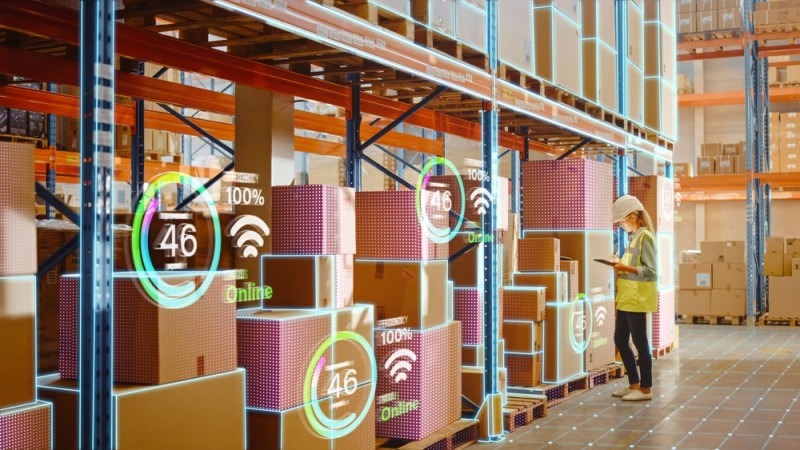
Efficient automation relies on technologies already used in warehouses, correctly connected.
Barcode Scanning
Scanning confirms the product, location, and order. For stable results, mandatory scanning is recommended during picking.
Integrated Weighing and Dimensioning
Scales connected directly to the system eliminate manual data entry and reduce re-billing.
Automatic Address Validation
Validation engines standardize addresses and check compatibility with delivery services.
Automatic Rules and Exception Management
The system allows the flow to continue for minor deviations and requires intervention only for real risks.
Why Automatic Checks
Why Automated Checks Do Not Delay Deliveries
At first glance, more controls seem to slow down the flow. In practice, the opposite happens.
Correct Errors Before Shipping
Eliminate returns, reshipments, and support tickets.
Decisions Occur in Real Time
The system validates instantly, not after the process is completed.
Operators Focus on Exceptions
The team intervenes only where needed, not with every package.
Integration with Existing WMS, ERP, and TMS
For most companies, completely changing the infrastructure is not an option. Automated double-checks integrate over existing systems.
Recommended steps:
- Identify points with frequent errors.
- Define verification rules.
- Connect systems via API or middleware.
- Test on real volumes.
- Adjust tolerances based on data.
Continuous Monitoring, Audit, and Optimization
Without visibility, automated checks cannot evolve. Performance dashboards help with:
- identifying couriers with higher exception rates
- adjusting rules
- measuring impact on costs
For a detailed analysis, you can use Innoship Free Analytics or the extended version described in assess the performance of your couriers with Innoship Free Analytics.
Practical Implementation Examples
Omnichannel Retailer in Romania
A retailer with over 10,000 daily orders introduced mandatory scanning and weight verification. In the first two months, returns due to incorrect products decreased by approximately 20%.
Regional Marketplace
A marketplace active in Romania, Poland, and the Czech Republic automated courier selection based on historical performance. The on-time delivery rate increased by up to 15%.
Measurable Benefits for eCommerce and Logistics
For most operations, the benefits appear quickly:
- reduction in operational costs by up to 20%
- decrease in returns and reshipments
- better visibility into courier performance
- scaling without proportional personnel increase
Mistakes to Avoid in Automating Checks
- defining too many rules from the start
- lack of smart exceptions
- not involving operational teams
- lack of clear reports
How Innoship Supports Double-Check Processes
Innoship acts as an orchestration layer between OMS, WMS, and couriers. The platform connects over 85 couriers from 15 countries and allows the definition of automated rules for selection, validation, and tracking.
The generation of shipping documents is a sensitive point in any flow. Automating this step reduces errors, as detailed in the shipping document generation Innoship solution.
Tracking data complements automated checks and provides post-delivery visibility. You can explore this aspect in the article about professional courier tracking for smarter logistics.
See how the performance dashboard for couriers works. Test the Innoship platform and optimize deliveries in multiple European markets!
Frequently Asked Questions
1. What is an automated double-check process in shipping?
It is a system that verifies the same shipping data at two different points using automated rules. The process allows shipments to move forward only when data matches predefined criteria.
2. Will automated double-checks slow down order processing?
No. These checks run in real time, usually in milliseconds, and replace manual controls. In practice, they reduce delays caused by errors, returns, and rework.
3. What types of shipping errors can automated checks prevent?
They prevent wrong product shipments, address errors, incorrect labels, weight discrepancies, and wrong courier or service selection.
4. Can automated double-check processes work with existing systems?
Yes. They are designed to integrate with existing OMS, WMS, ERP, and TMS systems via APIs or middleware, without requiring a full system replacement.
5. Are automated double-checks suitable for medium-sized businesses?
Yes. They are especially effective for businesses with recurring shipping errors and stable order volumes, offering fast ROI without adding operational complexity.
